Monday, April 25, 2011

Cannery Prices are Soaring!

I came across this report about pricing changes at the cannery.  I hope this doesn't discourage you from coming to the cannery, but will encourage you and your families to realize the importance of preparing and storing.  Don't wait for a later day, but respond today.  We cannot predict how pricing will change in the future.  There is the chance that pricing will continue to rise. 
Look for a cannery date to be posted soon!
Price increases on April 4th at the LDS canneries show inflation up between 11 and 49% for many basic food staples.  These rise in prices are a strong barometer for the overall economy since the LDS facilities are usually the last to raise prices for their communities, which provides food in bulk that they can collect through their vast networking operations.

According to the new price list from April 4th, many food staples have increased by more than 20% since the last price list came out just 3 months ago on January 3rd.
Beans. Black 13.69%
Beans, Pinto 12.13%
Beans, White 11.88%
Milk, Non Fat Dry 25.00%
Rice 38.99%
Sugar 33.81%
Wheat, Red/White 44.54%
Apple Slices 24.53%
Carrots 21.31%
Macaroni 40.25%
Oats, Quick 48.90%
Oats, Regular 49.19%
Onions 21.60%
Potato Flakes 33.33%
Spaghetti 38.99%
Beans, Refried 27.72%
Cocoa Mix 40.69%
Flour 29.70%
Fruit Drink Mix 26.20%
LDS churches and organizations have long been at the forefront in preparedness for families and communities.  As one of the wealthiest corporations in the world, their network of companies and church affiliations allow them access to cheaper food sources, and the capacity to store them for long periods of time through their canning facilities.

As the government and Federal Reserve continues to tell the American people that inflation is low, and contained by their monetary policies, the real barometer of inflation in the economy comes from the grocers, markets, and institutions that deal with food sales and production, and must monitor prices daily as commodities continue to climb.

The LDS's raising food prices at their canneries by 11 to 49% in just three months should be a serious wake-up call to all Americans on the true inflationary conditions that exist in our economy, and that we need to constantly look outside government reports for the true data affecting our spending and finances.

Thursday, March 31, 2011

Relief Society Event!

If you haven't reviewed the Relief Society Event post please click on the post archive titled

Just 13 days away!

GAS SAVING TIPS

Here are a few ideas to help save $ at the gas pump.  Did  you know you should buy gas in the morning?  READ ON...
(I was sent this article from a provident living group I belong to.)


 I don't know what you guys are paying for gasoline.... but here in California we are paying up to $3.75 to $4.10 per gallon. My line of work is in petroleum for about 31 years now, so here are some tricks to get more of your money's worth for every gallon:
Here at the Kinder Morgan Pipeline where I work in San Jose, CA we deliver about 4 million gallons in a 24-hour period thru the pipeline.. One day is diesel the next day is jet fuel, and gasoline, regular and premium grades. We have 34-storage tanks here with a total capacity of 16,800,000 gallons.
Only buy or fill up your car or truck in the early morning when the ground temperature is still cold. Remember that all service stations have their storage tanks buried below ground. The colder the ground the more dense the gasoline, when it gets warmer gasoline expands, so buying in the afternoon or in the evening....your gallon is not exactly a gallon. In the petroleum business, the specific gravity and the temperature of the gasoline, diesel and jet fuel, ethanol and other petroleum products plays an important role.
A 1-degree rise in temperature is a big deal for this business. But the service stations do not have temperature compensation at the pumps.
When you're filling up do not squeeze the trigger of the nozzle to a fast mode If you look you will see that the trigger has three (3) stages: low, middle, and high. You should be pumping on low mode, thereby minimizing the vapors that are created while you are pumping. All hoses at the pump have a vapor return. If you are pumping on the fast rate, some of the liquid that goes to your tank becomes vapor. Those vapors are being sucked up and back into the underground storage tank so you're getting less worth for your money.
One of the most important tips is to fill up when your gas tank is HALF FULL. The reason for this is the more gas you have in your tank the less air occupying its empty space. Gasoline evaporates faster than you can imagine. Gasoline storage tanks have an internal floating roof. This roof serves as zero clearance between the gas and the atmosphere, so it minimizes the evaporation. Unlike service stations, here where I work, every truck that we load is temperature compensated so that every gallon is actually the exact amount.
Another reminder, if there is a gasoline truck pumping into the storage tanks when you stop to buy gas, DO NOT fill up; most likely the gasoline is being stirred up as the gas is being delivered, and you might pick up some of the dirt that normally settles on the bottom.

JUST 13 DAYS AWAY

At the upcoming Relief Society event on Tuesday April 12th you will be reminded that living providently doesn't just include 72 hour kits and food storage.  It is a complete package!

It is a collection of learned skills,  ideas, and tools that will prepare you and your family to create a prefect preparedness package.  The church titles this package as Family Well-Being with 8 categories;  employment, home storage, gardening, finances, education and literacy, health, social and emotional strength, and emergency planning.  

Look forward to adding to your package these ideas, tools, and skills...

HOW TO CUT YOUR FAMILIES HAIR
by Niki Allen


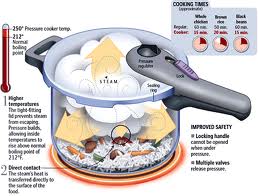
 PRESSURE COOKER CLASS
Safe, Quick, and they keep the Nutrition in!
by Dottie Farnsworth


We will have a variety of booths to observe, taste, touch, see, and glean new ideas from that will be available for you to explore here is just a sample of what will be offered.


WHAT WHEAT DO I USE AND WHY?
There is always more to learn about WHEAT
by Sam Bonzer


WHAT IS CERT?
Community Emergency Response.
Becoming involved for the safety of our community.
by Kathy Lazott and Maria Prescott


BRAIN FOOD SMOOTHIES!
Drink up the nutrition
by Lisa Nelson

HOME DECORATING FOR THE FAMILY
With a little time, patience, paint, rags, nails, and brushes you can create your own decor!
by Wendy Scanlan and Heidi Johnson


How to conserve ELECTRICITY
by Lee Torian


KEEP LIVING AND LEARNING
Just 10 minutes and you will be Dancing
by Rosa Hernandez


Come at 6:30 for this and more...

Thursday, March 10, 2011

Keizer Stake Garden Fair

Be sure to attend the first annual Keizer Stake Garden Fair.  It is Saturday March 12th at 10:AM.  This is a family activity and is sure to be a great opportunity to get you planning and preparing for the upcoming gardening season.

There are several classes for you to choose from.  Safe and friendly pest control is one of the highlights of the morning.

They will be serving a light refreshment.

Hope to see you there!

Sunday, March 6, 2011

Wheat Grinder for your WHEAT!

Have you ever asked yourself, how will I grind all of this wheat?  Once you have the wheat you have to have a plan for using it.  I was forwarded this information about an  electric wheat grinder.  If you really plan to use your wheat, having an electric grinder is the most realistic approach.  Hand grinding is a great thought for survival, but not realistic for someone who truly will be using their wheat on a regular or somewhat regular basis.  I guess you could look at it as a way to get exercise and then using the hand grinder would be your best bet.   You can find those for around $50 to $75.   I personally own an electric grinder that sells for $279.00.  It appears this Blendtec grinder is a great machine for the money.


Blendtec- The Kitchen Mill by K-TEC, only $139.00
Regular price is $299.95
Amazon price is $179.95
Please let me know if you want one. Please let me know right away.
I need orders & payment by April 1st. That gives you a month. 
Make checks payable to Christy Going.
Drop off or mail your check to 1415 SE 52nd Ave, Hillsboro, OR 97123.
If you have any questions let me know.
Christy
503-702-2026
Here's some information I got off Amazon:
Product Features
  • 1.75 Horse Power - 28,000 RPM
  • 5 Texture Settings - Fine to Coarse
  • 6 Year Manufacturers Warranty
  • Mills 1 Lb of Grain per Minute - Pan holds 24 Cups of Flour
Product Description
We love this grain mill! It is a super durable and inexpensive option compared to other electric grain mills. Discover the great taste of freshly milled grains. We sell this mill, but we also use it! We use it to make delicious fresh baked multi-grain bread and ezekiel bread. The taste of freshly milled whole grain bread can't be replicated with any store-bought or processed flour.Mills all grains
whole wheat, rye, oats, rice, buckwheat, millet, corn, soybeans, barley, triticale, spelt, lentils, beans, chickpeas & more. You will be delighted with the results. The Kitchen Mill was not designed to grind spices, sugar, high oil content seeds (sunflower, sesame, flax, etc..) nuts, coffee, dried fruits and the like. Makes flour from fine to coarse. The coarsest setting makes flour about as coarse as cornmeal. It does not do cracked grains.
Healthier flour
Whole grain flour is healthier than processed store-bought four that is generally milled from the endosperm of the grain, which contains mostly starch and a little protein. Whole grains contain natural fiber. Diets containing adequate amounts of fiber help you stay slim and avoid many of the diseases caused by fiber deficiency.
A great additon to food storage
Having whole grains in your food storage doesn't make much sense without a reliable way to convert that grain into nutritious usable flour. The Kitchen Mill is the perfect compliment to stored grains.
A quality investment
The Kitchen MillTM is made of the highest quality materials. The heart of the mill is a patented, stainless steel, MicroneticTM milling chamber. The mill is the most advanced way to mill grain. It has all the advantages of the old stone mills but none of their problems. There's no gum¬ming, jamming or glazing. Your Kitchen MillTM will not overheat. Each mill uses a 1.8 peak horsepower, 120 volt motor. It is permanently lubricated and will provide years of trouble-free service.


5 minute Artisan Bread


With just a few essential ingredients you will have crispy on the outside chewy on the inside homemade bread!